


The 2011 Showstopper Plants have been selected by The North Carolina Nursery & Landscape Association and North Carolina and the North Carolina Cooperative Extension.
Each year, North Carolina nurserymen nominate Showstopper Plants and five are selected by North Carolina Cooperative Extension horticulture experts.
These featured plants are promising new cultivars, able to thrive in North Carolina gardens.
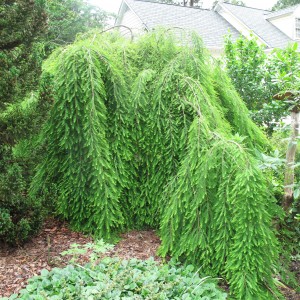
Name: Cephalotaxus harringtonia ‘Prostrata’, Japanese Plum Yew
Zones: 6 – 9
Size: 2’ to 3’ tall and wide. Slow growing
Conditions: Shade to part sun
A few years back, I had a meeting with Brandon Duncan, gardener for the Shuping’s in Raleigh, about featuring the Shuping’s garden on the Garden Conservancy’s Open Days tour. As I pulled into the driveway, I was immediately drawn to their use of Cephalotaxus harringtonia ‘Prostrata’, Japanese plum yew. Low and lining the curve of the parking pad at the top of the drive, the yew welcomed me.
I’m barely out of the car, when I asked Brandon about the yew. Plum yew is rather slow growing, yet this swath of ground cover was full and lush. I just assumed the plum yews had been there forever, but Brandon explained that since their initial growth pattern is in a fan shape, be butted two plants together, effectively creating a circle. Brilliant.
Today, I have Cephalotaxus harringtonia ‘Prostrata’, Japanese plum yew growing in my garden; and it’s doing very well.
In the past, we southerns dreamed of growing the common yew in our home gardens. Many cultivars are not tolerant of our summer heat and humidity, but harringtonia ‘Prostrata’, Japanese plum yew likes us.
I’m a big fan of ground covers; while I need mulch, I don’t necessarily want to see it. I want to see happy plants growing snuggle in my garden. Providing me color, texture, and cover for the wildlife that needs places to scurry too during threats of danger or inclement weather.
I’ve used the Cephalotaxus harringtonia ‘Prostrata’, Japanese plum yew in a couple of ways in my garden, both as a specimen and en masse. Locate in shade and even part sun, plum yew is a winner in my garden.
And speaking of deer (aren’t we always speaking, or at least, thinking of deer?) Cephalotaxus harringtonia ‘Prostrata’, Japanese plum yew are deer resistant.
Do you grow Cephalotaxus harringtonia ‘Prostrata’, Japanese plum yew in your garden?
2011 Showstopper Plant winners:
Camellia ‘Winter’s Charm
Venus Sweetshrub
Japanese Plum Yew
Climbing Hydrangea
Kousa Dogwood
By: Helen Yoest
The TarHeelGardening blog is published and edited by Helen Yoest. For more information on Tarheel Gardening, please visit our website at Tarheel Gardening - your online resource for North Carolina gardening enthusiasts.
Sponsored by the North Carolina Nursery and Landscape Association